
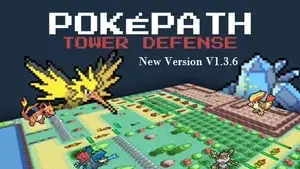
About PokePath TD
PokePath TD is a tower defense game set around winding defense routes. During PokePath TD, check this choice before the next encounter. Your aim is to stop advancing waves by building and improving a carefully positioned defense. Build a team of Pokémon defenders, plan their placement along winding routes, and improve your formation against increasingly difficult enemy waves. This page brings together the browser player, control guidance, and practical explanations so you can choose an approach before starting. Read the game information, open the player when ready, and return to the guide whenever a particular decision needs a closer look.
PokePath TD runs through an external embedded game service. In PokePath TD, leave yourself time to respond when conditions change. The available version, loading screens, game menus, and saving behavior are determined by that service. This guide explains the experience offered by the linked player without promising that every feature of another release is present.
PokePath TD: Route geometry
Practical guidance for PokePath TD
PokePath TD centers this part of the tower defense experience on a practical decision. For PokePath TD practice, compare the outcome with your previous attempt. Enemies follow a route through the arena. Bends and overlapping attack areas can give a defender more time to hit the same target than a position beside a short straight segment. Start by observing one manageable encounter before committing to a longer attempt. Notice what changes when you alter your position or selection. Keeping that comparison small makes the result easier to understand and gives your next decision a clear purpose.
PokePath TD becomes easier to follow when you connect this idea to your goal: stop advancing waves by building and improving a carefully positioned defense. During PokePath TD, check this choice before the next encounter. Before moving on, check what the current screen tells you about the next challenge.
PokePath TD: Starting partner
PokePath TD centers this part of the tower defense experience on a practical decision. Use the PokePath TD controls to review the relevant option before continuing. The opening creation screen asks you to choose a partner. Read the displayed ability before starting, because its damage pattern affects which early waves your team handles comfortably. Compare the options available on the current screen rather than relying on a remembered rule from another Pokémon title. Similar characters can appear in games with very different systems. Read the displayed information and test a change where the consequences are easy to follow.
PokePath TD becomes easier to follow when you connect this idea to your goal: stop advancing waves by building and improving a carefully positioned defense. For PokePath TD practice, compare the outcome with your previous attempt. Before moving on, check what the current screen tells you about the next challenge.
PokePath TD: Enemy inspection
PokePath TD centers this part of the tower defense experience on a practical decision. In PokePath TD, leave yourself time to respond when conditions change. Upcoming enemies display properties such as health, armor, speed, regeneration, and status vulnerability. Read these before committing resources to a wave that may require a specific counter. Choose an improvement that solves the problem you are actually encountering. If an attempt fails, identify whether movement, preparation, resource use, or an unfavorable matchup created the pressure. That distinction helps you avoid spending time on an upgrade that does not address the cause.
PokePath TD becomes easier to follow when you connect this idea to your goal: stop advancing waves by building and improving a carefully positioned defense. Use the PokePath TD controls to review the relevant option before continuing. Before moving on, check what the current screen tells you about the next challenge.
PokePath TD: Damage coverage
PokePath TD centers this part of the tower defense experience on a practical decision. During PokePath TD, check this choice before the next encounter. A defense needs to handle different enemy properties. Strong raw damage is useful, but it may not solve regeneration, armor, invisibility, or a target that moves through range too quickly. Preserve enough flexibility to respond when the situation changes. A plan that depends on every encounter following exactly the same pattern can become fragile. Keep an alternative available and reassess before a small disadvantage turns into a difficult recovery.
PokePath TD becomes easier to follow when you connect this idea to your goal: stop advancing waves by building and improving a carefully positioned defense. In PokePath TD, leave yourself time to respond when conditions change. Before moving on, check what the current screen tells you about the next challenge.
PokePath TD: Status effects
PokePath TD centers this part of the tower defense experience on a practical decision. For PokePath TD practice, compare the outcome with your previous attempt. Burn, poison, slow, and stun can influence an enemy wave. Check whether a target can receive a particular effect before relying on that effect as the center of your plan. Use quieter moments to inspect the interface and prepare your next action. Trying to read several unfamiliar indicators during a demanding encounter makes learning harder. A short review beforehand lets you concentrate on the important changes when action resumes.
PokePath TD becomes easier to follow when you connect this idea to your goal: stop advancing waves by building and improving a carefully positioned defense. During PokePath TD, check this choice before the next encounter. Before moving on, check what the current screen tells you about the next challenge.
PokePath TD: Team slots
PokePath TD centers this part of the tower defense experience on a practical decision. Use the PokePath TD controls to review the relevant option before continuing. Your formation has limited team slots, with additional slots shown as locked. Work with the available positions and inspect the displayed requirements before planning a much larger roster. Watch for a repeatable warning rather than judging the result from a single surprising moment. Learning an animation, route, menu prompt, or attack pattern gives you something concrete to react to. Make the next attempt a test of that observation.
PokePath TD becomes easier to follow when you connect this idea to your goal: stop advancing waves by building and improving a carefully positioned defense. For PokePath TD practice, compare the outcome with your previous attempt. Before moving on, check what the current screen tells you about the next challenge.
PokePath TD: Upgrade timing
PokePath TD centers this part of the tower defense experience on a practical decision. In PokePath TD, leave yourself time to respond when conditions change. Spend resources where an improvement changes the next encounter. Strengthening a defender that attacks often may contribute more than distributing small upgrades across units with poor coverage. Treat each available option as part of a larger plan. A strong individual choice can still fit poorly with the rest of your setup. Compare the benefits you gain with the useful action or resource you give up by selecting it.
PokePath TD becomes easier to follow when you connect this idea to your goal: stop advancing waves by building and improving a carefully positioned defense. Use the PokePath TD controls to review the relevant option before continuing. Before moving on, check what the current screen tells you about the next challenge.
PokePath TD: Evolution planning
PokePath TD centers this part of the tower defense experience on a practical decision. During PokePath TD, check this choice before the next encounter. Evolution is part of longer-term Pokémon development. Review the current game interface for requirements and consider whether a key improvement is available before starting a difficult wave. Keep a simple goal for the session so progress is recognizable. Learning one mechanic, exploring a new area, or correcting a repeated mistake can be worthwhile even without finishing a major challenge. Review the result before deciding what to practice next.
PokePath TD becomes easier to follow when you connect this idea to your goal: stop advancing waves by building and improving a carefully positioned defense. In PokePath TD, leave yourself time to respond when conditions change. Before moving on, check what the current screen tells you about the next challenge.
PokePath TD: Resource management
PokePath TD centers this part of the tower defense experience on a practical decision. For PokePath TD practice, compare the outcome with your previous attempt. Gold and progression resources support different decisions. Keep track of what a purchase changes, and avoid spending simply because a button becomes available. Pay attention to what the interface actually confirms after a selection. A highlighted option, changed statistic, or new objective can tell you whether the action registered. This is especially helpful when keyboard focus has moved between the web page and the embedded player.
PokePath TD becomes easier to follow when you connect this idea to your goal: stop advancing waves by building and improving a carefully positioned defense. During PokePath TD, check this choice before the next encounter. Before moving on, check what the current screen tells you about the next challenge.
PokePath TD: Wave control
PokePath TD centers this part of the tower defense experience on a practical decision. Use the PokePath TD controls to review the relevant option before continuing. The next-wave control lets you decide when to begin. Use that interval to review placement, enemy information, and resources instead of immediately advancing after every success. Revisit an earlier decision when new information becomes available. An encounter that seemed difficult may become manageable after changing the order of your actions or preparing a different partner. Use the current situation to guide that adjustment.
PokePath TD becomes easier to follow when you connect this idea to your goal: stop advancing waves by building and improving a carefully positioned defense. Before moving on, check what the current screen tells you about the next challenge.
PokePath TD: Auto mode
PokePath TD centers this part of the tower defense experience on a practical decision. In PokePath TD, leave yourself time to respond when conditions change. Automatic wave progression can reduce repetition on manageable content. Turn your attention back to the game when a new enemy property appears or the defense begins losing coverage. Balance experimentation with protecting the progress you value. Learn unfamiliar systems in a manageable situation, and check available save or return options before a longer attempt. The game itself determines which progress persists and which choices can be reversed.
PokePath TD becomes easier to follow when you connect this idea to your goal: stop advancing waves by building and improving a carefully positioned defense. Before moving on, check what the current screen tells you about the next challenge.
PokePath TD: Retrying routes
PokePath TD centers this part of the tower defense experience on a practical decision. During PokePath TD, check this choice before the next encounter. A difficult route is an opportunity to reconsider placement and counters. Record which enemy escaped and why before repeating the same arrangement without a meaningful change. Separate a gameplay problem from a loading or input problem. If the picture stops responding, check the player focus and pause state before changing your strategy. Once the game responds normally, return to the specific tactical decision you wanted to understand.
PokePath TD becomes easier to follow when you connect this idea to your goal: stop advancing waves by building and improving a carefully positioned defense. Before moving on, check what the current screen tells you about the next challenge.
PokePath TD: Starting the browser player
PokePath TD players can use the following guidance before beginning a session. For PokePath TD practice, compare the outcome with your previous attempt. Press the red Play button to load the embedded player. Some games present a second start screen of their own, so a further click inside the frame can be necessary. Let the loading indicator finish before pressing several buttons. Your first interaction may also enable sound that the browser prevented from playing automatically. If a menu is visible, read its prompts before continuing. The surrounding page provides the game guide, while the controls and choices inside the player belong to the game service.
PokePath TD: Keyboard focus and fullscreen
PokePath TD players can use the following guidance before beginning a session. Use the PokePath TD controls to review the relevant option before continuing. Click inside the player before using movement or action keys. When focus remains on the surrounding page, arrow keys may scroll the document instead of controlling your character. Fullscreen can provide more usable space, but the exact layout depends on the embedded game. Exit fullscreen with the player control or the browser’s standard escape behavior. If you return to the guide and then resume, click the game again. This simple focus check solves many apparent input failures without restarting an active session.
PokePath TD: Device and connection expectations
PokePath TD players can use the following guidance before beginning a session. In PokePath TD, leave yourself time to respond when conditions change. Check the device-support information beside the player before starting. A page that fits on a phone does not necessarily provide a usable touch control scheme for every embedded game. A stable connection helps the initial download and any online features, while browser extensions or privacy settings can influence third-party resources. Loading times differ between services and versions. If a game fails to load, try its reload control once after checking the connection; repeated rapid refreshes can discard useful progress without fixing the underlying issue.
PokePath TD: Progress, saves, and longer sessions
PokePath TD players can use the following guidance before beginning a session. During PokePath TD, check this choice before the next encounter. Review the game’s own saving options before investing in a long attempt. A local save, an exported emulator state, and an account-based cloud save are different features. The host site does not automatically combine them. Private browsing and clearing site storage can affect locally stored progress, while an external account follows the external service’s rules. When an export option exists, keep your own backup and check that the file was created. Avoid closing or refreshing a player while it is saving.
PokePath TD: Choosing a useful practice goal
PokePath TD players can use the following guidance before beginning a session. For PokePath TD practice, compare the outcome with your previous attempt. Pick one action you want to perform more consistently during the next session. You might improve movement, prepare a better team, recognize a dangerous attack, or understand a resource limit. Start with an encounter that leaves time to observe the result. Change one major decision, then compare what happened with the previous attempt. This gives you a practical reason to continue beyond a score alone. If a session becomes frustrating, take a break and return with a narrower goal instead of repeating the same approach automatically.
PokePath TD: Sharing feedback with other players
Questions and next steps for PokePath TD
PokePath TD players can use the following guidance before beginning a session. Use the PokePath TD controls to review the relevant option before continuing. Use the comment form to describe a specific experience. Include the part of the game involved, the device you used, and what happened after your action. A clear report helps other players distinguish a gameplay question from a browser problem. Keep passwords, account recovery information, and personal contact details out of the public comment. Your name and message can appear publicly, but the submitted email is kept private. Likes and dislikes provide a quick preference signal; a thoughtful explanation adds useful context to that signal.
No comments yet. Share your experience.